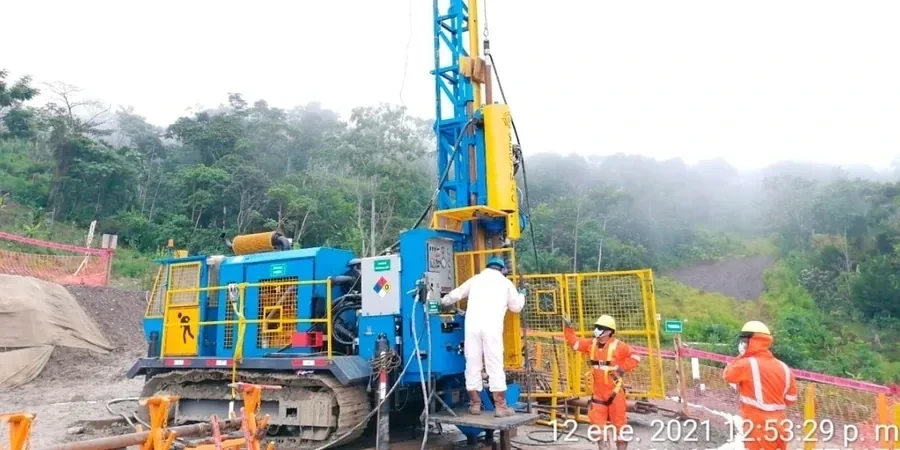
The kit we pull up to site with in Aylesbury usually involves a double-packer assembly, a water meter calibrated down to fractions of a litre per minute, and enough hose to run a constant-head test twenty metres down if the geology demands it. Most of the town sits on a complicated stack of Kimmeridge Clay over Gault, with pockets of river gravel threading through the Thame valley at elevations around 72 metres above ordnance datum. When we run a Lefranc test in a borehole through weathered Gault, the flow rate often tells a different story than the lab remoulded sample ever could — and that discrepancy is exactly why we bring the gear out. For deeper rock sections below the clay cap, the Lugeon method becomes the tool of choice, especially where Portland Stone or the underlying Corallian beds show fracture flow that a simple falling-head test would miss entirely.
A single Lugeon test in fractured chalk under Aylesbury can save more in dewatering redesign than twenty lab permeameter runs on intact core.
Q&A
What kind of budget should I expect for a Lefranc or Lugeon test programme around Aylesbury?
For a site investigation including two to three Lefranc test intervals in soil and a single-borehole Lugeon profile through chalk, budgets typically land between £530 and £810 per borehole day, depending on access constraints and the number of pressure stages logged. Mobilisation and piezometer installation are quoted separately after we review the borehole schedule.
How do you decide between a Lefranc test and a Lugeon test on the same Aylesbury site?
It comes down to the geology. In soil-like materials — the Gault, Kimmeridge Clay, or river terrace deposits — we use the Lefranc method because the test section can be left uncased and the flow remains laminar. As soon as the borehole hits the chalk or the Portland Stone, we switch to a Lugeon setup with packers to isolate fracture zones and run multi-stage pressure tests, which tell us whether flow is fracture-dominated, dilatant, or shows signs of hydraulic jacking.
How long does a field permeability test programme take from setup to final report?
A single borehole with two Lefranc intervals and one Lugeon profile is usually completed in one field day, assuming stable hole conditions. Laboratory index testing on companion samples — Atterberg limits, particle size distribution — runs in parallel and takes three to five working days. The factual report with interpreted hydraulic conductivity values, Lugeon diagrams, and groundwater control notes is typically issued within ten working days of demobilisation.