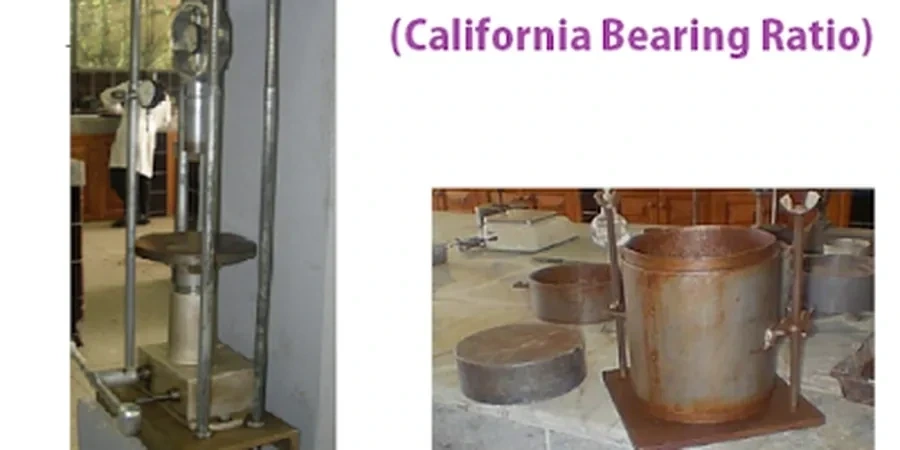
The A419 approaches into Aylesbury see constant heavy goods traffic, and when a new distribution centre broke ground near the Berryfields expansion, the site investigation revealed clay subgrades that turned to slurry after a week of rain. That project drove home how a simple laboratory CBR test can make or break a pavement design. We ran soaked California Bearing Ratio specimens at the client's request, comparing them against the in-situ sand cone density values already gathered, and the numbers forced a complete redesign of the capping layer. In Aylesbury, where the geology shifts from Gault Clay to Portland Stone within half a mile, getting a reliable CBR value is not a box-ticking exercise. For road foundations, car parks, or hardstandings on the clay-rich soils common across the Vale, the soaked CBR from BS 1377-4 gives you the design parameter that empirical methods actually need. Our laboratory processes samples from across Aylesbury, ensuring conditioning and penetration follow the standard to the letter.
A soaked CBR value of 2 per cent versus 5 per cent can change your sub-base thickness by 150 millimetres—on a 2-hectare site in Aylesbury, that decision carries a six-figure cost implication.
Local ground factors
Aylesbury sits at roughly 80 metres above ordnance datum on the Thame floodplain margin, and parts of the town—particularly around the Bear Brook corridor—have groundwater within a metre of the surface for much of the winter. Running a CBR test at natural moisture content alone, without a full four-day soak, can overestimate the subgrade strength by a factor of two or three. We have seen exactly that on a site off Bicester Road where the contractor's initial pavement design assumed a CBR of 10 per cent, but soaked laboratory values came back at 3.5 per cent. The consequence was a car park surface that would have rutted within the first wet season, triggering a costly early intervention. The BS 1377-4 soaking procedure exists precisely to replicate the worst-case moisture condition—saturation after construction—and skipping it because of programme pressure is a risk that sits squarely with the designer. In Aylesbury's mixed geology, where thin drift deposits overlie weathered bedrock, the laboratory CBR test provides the one number that ties directly into the DMRB design charts.
Q&A
What does a CBR test actually tell you about the soil?
The California Bearing Ratio compares the force needed to push a standard plunger into the soil specimen against the force needed to achieve the same penetration in a crushed stone reference material. It is an empirical index of shear strength and stiffness under controlled moisture and density conditions. A value of 2 per cent indicates a very weak clay subgrade; 15 per cent or above suggests a well-compacted granular material suitable for minimal pavement construction.
How long does a laboratory CBR test take from sample receipt to report?
A soaked CBR test requires a four-day soaking period plus time for compaction, penetration, and moisture content determination. In practice, you are looking at seven to eight working days from sample delivery to the final report. Unsoaked tests can be turned around within 24 to 48 hours if the laboratory schedules the work on receipt.
What is the typical cost range for a laboratory CBR test in Aylesbury?
For a standard three-point soaked CBR test to BS 1377-4, prices in the Aylesbury area generally run between £80 and £190 per specimen set, depending on the number of points and whether swell monitoring is required. A single-point unsoaked test sits at the lower end of that range.
Can you test samples that were compacted on site rather than in the lab?
Yes, we routinely test undisturbed or recompaacted samples supplied by the contractor. The key is that the sample must be representative of the compacted layer and delivered in sealed containers to preserve the field moisture content. The laboratory then trims and loads the specimen into the CBR mould with the appropriate surcharge rings before soaking.
Which standard applies for CBR testing on UK highway projects?
The primary standard is BS 1377-4:1990, and the design application is governed by the Highways England DMRB, specifically CD 225 for pavement foundations. For projects within Aylesbury Vale that fall under Buckinghamshire Council's highway adoption process, the same national standards apply, but the local authority may specify additional compaction verification requirements.