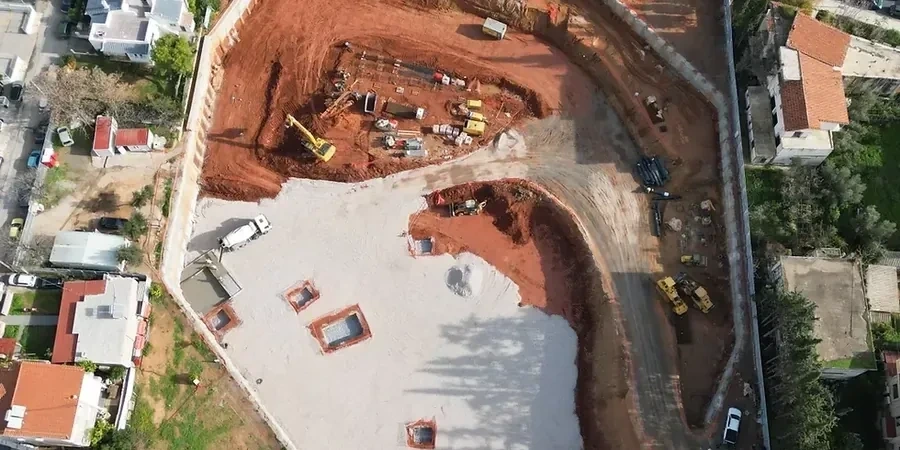
Aylesbury sits on a layered sequence of Gault Clay, Lower Chalk and alluvial deposits from the River Thame. Cut deeper than three metres and you almost always hit groundwater. The town centre redevelopment and the Berryfields expansion have pushed excavation depths into the 6-9 metre range, right where the chalk aquifer starts influencing stability. What looks like competent material at the surface often masks running sand lenses within the gravels. In our experience, designs that rely solely on desktop data without integrating in-situ permeability testing misjudge the phreatic line by metres. The local geology demands a soil-structure interaction model that respects the brittle nature of the chalk and the time-dependent settlement of the Gault. A thorough ground investigation backed by CPT testing helps map the transition between the dense gravel and the weathered chalk before any shoring scheme is finalised.
In Aylesbury, the difference between a dry excavation and a costly failure is knowing exactly where the chalk aquifer sits before the first bucket goes in.
Q&A
What is the typical cost range for a deep excavation design package in Aylesbury?
For a residential basement or small commercial cut, design fees typically fall between £1,580 and £6,650 depending on depth, proximity to neighbouring structures, and the complexity of the groundwater control required. Larger infrastructure cuts are scoped individually after the desk study.
How does the chalk affect excavation stability in Aylesbury?
The chalk is fractured and water-bearing. Stability is controlled by joint spacing and infill material. Grade III chalk can stand near-vertically in short-term cuts, but once water moves through the fractures it degrades rapidly. Our designs always include a face treatment specification for chalk exposures lasting more than 48 hours.
Do I need a retaining wall or can I batter the excavation?
Battering is possible on greenfield sites if you have the space and can manage surface water. In Aylesbury's urban plots, setbacks are tight and the Gault Clay needs a slope no steeper than 1:2.5 for long-term stability. Most town-centre projects end up needing a vertical retention system.
How long does the design and approval process take?
A typical basement scheme in Aylesbury takes four to six weeks from receipt of a compliant ground investigation to issuing the final construction package. This allows for finite element modelling, internal peer review, and any dialogue with Building Control regarding departures from standard details.
What is the biggest geotechnical risk for a deep excavation here?
Uncontrolled water inflow. The chalk aquifer is confined under the alluvium in parts of the town. A single unsealed investigation borehole can provide a direct path for water to flood the dig. We always recommend grouting up legacy boreholes within the zone of influence before excavation starts.