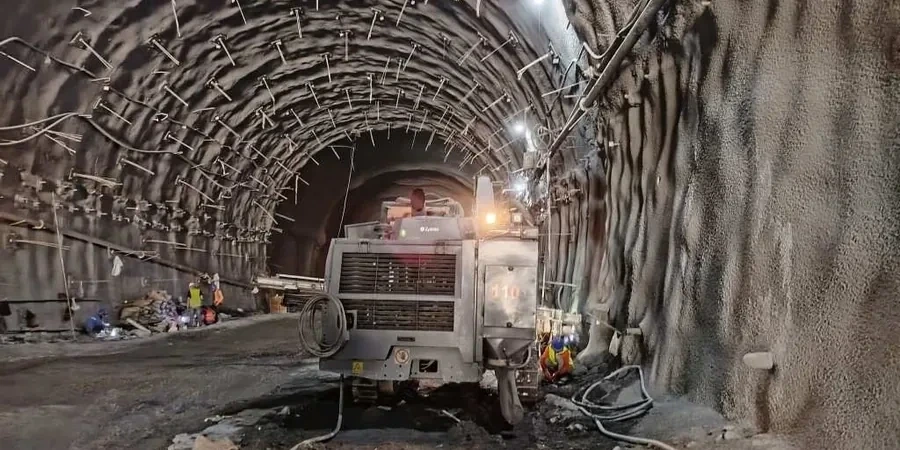
A basement excavation on Buckingham Street went three metres deeper than the original borehole logs suggested. The contractor hit a perched water lens in the Lower Greensand that nobody had mapped before. We got the call when the inclinometers showed 28 mm of lateral movement in a single 24-hour window. That is the reality of digging in Aylesbury, where the Gault Clay and Woburn Sands meet in unpredictable ways. Our geotechnical excavation monitoring service puts vibrating-wire piezometers, tilt sensors and total-station arrays around the perimeter before the first bucket breaks ground. We track deformation against the trigger thresholds defined in the temporary works design and feed data back to the site team every four hours when the excavation passes the water table. For jobs where the retaining system needs close control, we integrate deep excavation instrumentation to link wall deflection with strut load cells in one dashboard.
When inclinometers move 3 mm in an hour, the temporary works designer needs the call before the next concrete pour.
Q&A
What does a typical monitoring setup cost for a single-storey basement in Aylesbury?
For a standard 4‑6 week basement dig with inclinometers, settlement points and a single piezometer, budgets usually fall between £600 and £1.720 depending on the number of instruments and the reporting frequency required by the building control officer.
How quickly can you deploy instruments once the contract is signed?
We can mobilise within three working days for urgent jobs in Aylesbury. Installation of a complete perimeter array — inclinometer casings, surface monuments and piezometers — normally takes two days on site, provided the piling or wall installation is complete and access is clear.
Do you supply monitoring for Network Rail or highways‑adjacent excavations?
Yes. We have experience with track‑side monitoring near the Aylesbury–Marylebone line and with excavations adjacent to Bucks Council highways. We follow Network Rail standards NR/L2/CIV/003 and the DMRB where applicable, and we coordinate with the asset owner’s engineer on trigger levels before work starts.
What happens if an instrument breaks or gives erratic readings mid‑project?
Every instrument is checked against a manual reading within 24 hours of installation. If a sensor drifts or fails, we swap it out the same day — we keep spare piezometers, inclinometer probes and data loggers in the van. The reporting platform flags gaps in the data stream immediately, so no one is relying on a broken channel without knowing it.