← Home · Laboratory

Atterberg Limits Testing for Ground Investigation in Aylesbury

Together, we solve the challenges of tomorrow.

DETAILS →

The clay formations beneath Aylesbury tell a complex story. Last winter we saw a foundation design in the Berryfields expansion area where the borehole logs flagged a highly plastic stratum at 2.8 metres depth. The developer had no Atterberg data. The design team paused the entire pad layout until we delivered the liquid and plastic limit results. Aylesbury sits on a mix of Kimmeridge Clay and Gault Clay overlain by river gravels near the Bear Brook corridor. This means plasticity can shift dramatically across a single site. An SFT drilling programme gives you the sample. The Atterberg analysis gives you the behavioural classification. Without it, shrinkage and swell potential remain unknown. Our lab processes samples within 48 hours because we know the programme clock never stops on a Buckinghamshire site.

Plasticity index in Aylesbury Gault Clay regularly exceeds 35 per cent. That number alone can change a foundation depth by a metre.

Approach and scope

The contrast between the north and south of Aylesbury is stark. Sites near the town centre and southwards toward Stoke Mandeville often encounter Gault Clay with liquid limits ranging from 55 to 75 per cent. Move north toward the Quarrendon area and the Kimmeridge Clay dominates. It is leaner. It is siltier. Its plastic limit runs tighter. That difference changes the earthworks specification entirely. Our testing follows BS 1377-2 procedures with calibrated Casagrande cups and cone penetrometer fallback for high-plasticity material. A grain size analysis run in parallel with the Atterberg limits pinpoints the clay fraction precisely. When the plasticity index climbs above 30 in Aylesbury clay, the foundation engineer needs to consider Improvement techniques such as stone columns. The data drives the decision. We deliver classification in the Casagrande plasticity chart mapped to BS EN ISO 17892-12:2018.
Atterberg Limits Testing for Ground Investigation in Aylesbury
Technical reference image — Aylesbury

Site-specific factors

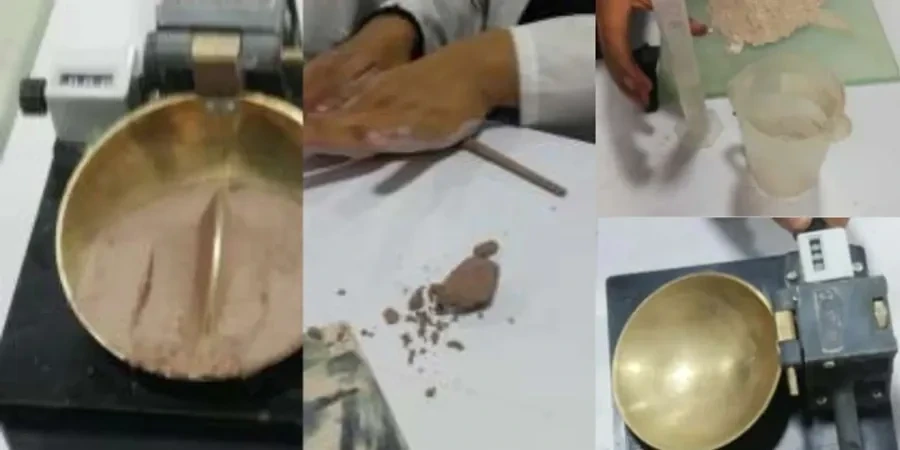
The lab bench in our Aylesbury facility runs three Casagrande cups in parallel. Each cup gets calibrated monthly against a reference groove tool traceable to UKAS standards. Why does this matter? A worn cup adds two to three points to the liquid limit. Over a 200-home development on Gault Clay, that error propagates into overdesigned foundations or underestimated heave. The technician places the paste. The crank turns at two revolutions per second. The count stops when the groove closes over 13 millimetres. The test looks simple. It is not. Moisture equilibration must be perfect. The mixing time must be consistent. Aylesbury clays contain occasional pyrite bands that oxidise during drying and shift the Atterberg limits. We flag that in the report. The equipment discipline protects the geotechnical model. The soil description log means nothing without the plasticity numbers to back it.

Need a geotechnical assessment?

Reply within 24h.

Email: contact@geotechnical-engineering1.com

Technical parameters


ParameterTypical value
Liquid Limit (LL)Determined by Casagrande cup method (BS 1377-2:1990)
Plastic Limit (PL)Thread-rolling method at constant moisture content
Plasticity Index (PI)Calculated as LL minus PL
Liquidity Index (LI)Computed from in-situ moisture and Atterberg limits
Consistency IndexDerived parameter for strength correlation
Sample PreparationWet sieving through 425 μm sieve per standard
Classification ChartCasagrande plasticity chart with A-line and U-line
Reporting StandardBS EN ISO 17892-12:2018 + A2:2022

Related technical services

01

Atterberg Limits Classification Package

Complete liquid limit, plastic limit, and plasticity index determination on disturbed samples from trial pits or boreholes. Includes Casagrande chart classification and consistency index calculation for Aylesbury clay formations.

02

Combined Index Testing Suite

Atterberg limits paired with natural moisture content and particle density. Delivers liquidity index and void ratio data for effective stress analysis in Gault and Kimmeridge Clay profiles.

Relevant standards


BS 1377-2:1990, BS EN ISO 17892-12:2018 + A2:2022, Eurocode 7 (BS EN 1997-2:2007)

Q&A

How much does Atterberg limits testing cost for a small site in Aylesbury?

A standard set of Atterberg limits on a single disturbed sample typically ranges from £50 to £70 in Aylesbury. The final cost depends on the number of specimens and whether expedited reporting is required.

How many samples do I need for my Aylesbury project?

BS EN 1997-2 recommends at least one Atterberg determination per distinct stratum encountered in the borehole or trial pit log. For Aylesbury sites with variable clay bands, we advise a sample every 1.5 metres of depth within cohesive layers to capture the plasticity profile accurately.

What makes Aylesbury clay different from other UK clays?

Aylesbury sits at the boundary between Kimmeridge Clay to the north and Gault Clay to the south. The Gault Clay typically shows a higher plasticity index, often above 30 per cent, which indicates significant volume change potential. The Kimmeridge Clay is more silty and has a lower liquid limit. This geological transition means two sites three miles apart can demand completely different foundation approaches.

How long does the lab take to deliver Atterberg results?

Standard turnaround is 48 hours from sample receipt for routine projects. We offer a 24-hour expedited service for tight construction programmes in Aylesbury. The drying and equilibration stages cannot be rushed without compromising accuracy, so we never cut corners on conditioning time.
Explanatory video

Location and service area


We serve projects across Aylesbury and its metropolitan area.

View larger map
ter>