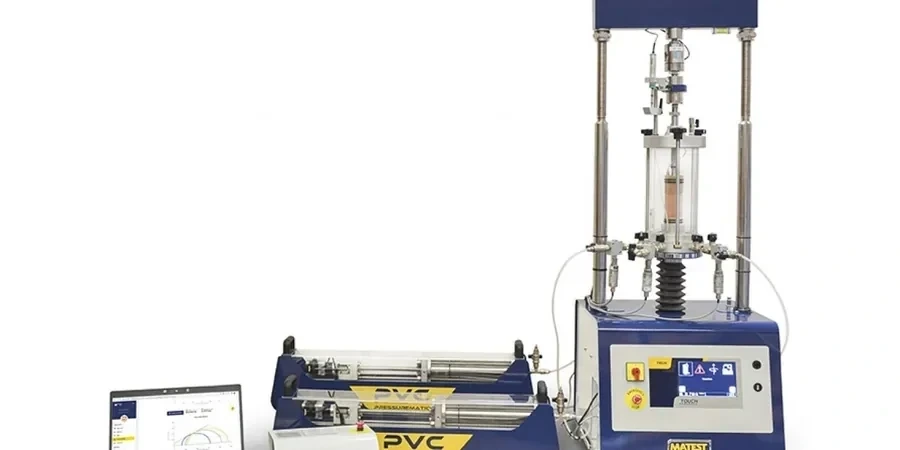
Geotechnical laboratory testing forms the bedrock of safe and compliant construction across Aylesbury and the wider Buckinghamshire region. This category encompasses the full suite of physical and mechanical analyses performed on soil and rock samples recovered from site investigations. From routine classification to advanced strength testing, our Aylesbury laboratory provides the critical data engineers need to design foundations, assess slope stability, and manage earthworks. Without accurate laboratory data, ground models remain speculative, leading to over-design, costly delays, or, in the worst cases, structural failure.
Aylesbury's geological context makes laboratory testing particularly important. The town sits largely on the mudstones and limestones of the Jurassic and Cretaceous periods, including the Ancholme Group clays and the Purbeck and Portland formations. These materials can be notoriously variable: the clays are often shrinkable and prone to volume changes with moisture fluctuation, while the limestones may contain solution features and variable strength. Superficial deposits, including glacial till and alluvium in the Thame Valley, add further complexity. A robust program of grain size analysis (sieve + hydrometer) and Atterberg limits testing is essential to characterise this variability and predict ground behaviour accurately.
All testing is conducted in strict accordance with the relevant British Standards, primarily the BS 1377 series (Methods of test for soils for civil engineering purposes) and BS EN ISO 17892 (Geotechnical investigation and testing — Laboratory testing of soil). These standards define everything from sample preparation to test procedures and reporting, ensuring consistency and legal defensibility. For projects involving earthworks, compliance with the Specification for Highway Works (SHW) Series 600 is often mandatory, dictating specific compaction-related tests. Our laboratory's adherence to these norms, verified through UKAS accreditation, provides Aylesbury's developers and consulting engineers with the assurance that results will be accepted by local authority building control and regulatory bodies.
The range of projects in Aylesbury that demand comprehensive laboratory testing is broad. The ongoing housing expansion in strategic allocations like the Aylesbury Vale requires detailed classification testing for foundation design and to satisfy NHBC requirements. Infrastructure improvements, such as the Aylesbury Link Road schemes, rely on strength and compaction tests for road pavement design. Commercial developments on former industrial or agricultural land often necessitate chemical testing for contamination, alongside geotechnical classification. Even smaller domestic extensions can benefit from basic testing to avoid the pitfalls of building on Aylesbury's shrinkable clays, a lesson painfully learned in areas with a history of subsidence.
Laboratory testing provides the quantitative data on soil strength, compressibility, and chemical composition that visual descriptions alone cannot. Given Aylesbury's variable geology of shrinkable clays and limestone, this data is critical for designing foundations that can withstand ground movement and for classifying materials for earthworks in line with BS 5930 and Eurocode 7 requirements.
The primary standards are BS 1377, which details methods for soil testing, and BS EN ISO 17892, the European standard for geotechnical laboratory testing. For highway earthworks, the Specification for Highway Works (SHW) Series 600 is also key. Compliance with these ensures test results are robust, repeatable, and accepted by regulators and warranty providers.
The required testing suite depends on the ground conditions, project type, and design loads. A factual ground investigation report typically recommends a schedule. For a housing development on clay, this often includes Atterberg limits and triaxial tests. An earthworks project will need compaction-related tests. We can advise on a bespoke schedule based on the project's geotechnical risk register.
Classification tests, such as particle size distribution and Atterberg limits, describe the soil's physical nature and predict its general behaviour, like shrink-swell potential. Strength tests, such as triaxial compression or direct shear, measure the soil's ability to withstand load without failing. Both are essential: classification builds the ground model, while strength tests provide design parameters.