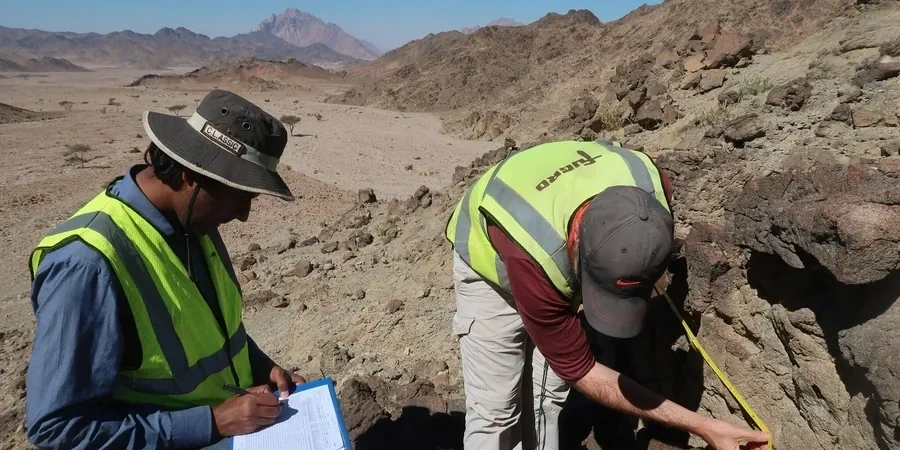
The Chiltern Hills don't feel particularly seismic, but Aylesbury's growing skyline and the clay-with-flints overlying Chalk bedrock create a specific amplification risk that standard maps ignore. We run seismic microzonation campaigns across the town—from the redevelopment plots near the Waterside Theatre to the industrial estates off Bicester Road—measuring Vs30 and fundamental site period with 24-channel geophones and active-source MASW. A desk study tells you nothing about how the Gault clay or the Lambeth Group sands will actually shake. Our lab combines MASW surface wave testing with seismic refraction tomography to catch hidden velocity inversions that Eurocode 8 site classification alone can miss, and we cross-check soft zones with CPT soundings for a complete dynamic profile.
A 15% difference in Vs30 changes your design spectrum—microzonation finds those boundaries before the foundation does.
Q&A
Why does Aylesbury need seismic microzonation—isn't the UK a low-seismicity region?
The UK is low-to-moderate seismicity, but BS EN 1998-1 still applies to structures in consequence classes CC2 and above. Aylesbury sits on variable superficial deposits over Chalk; site amplification can easily double peak ground acceleration relative to rock outcrop. Microzonation gives the structural engineer a site-specific spectrum instead of a conservative default—often reducing design loads.
What does a microzonation survey cost for a typical Aylesbury development site?
For a standard residential or commercial plot in the Aylesbury area, a MASW-based microzonation campaign with Vs30 mapping typically runs between £3,640 and £13,520 depending on the number of lines, whether passive arrays are included, and the reporting detail required.
How long does a microzonation field campaign take on site?
A single MASW line with 24 channels and active source takes roughly two to three hours including setup, shooting, and geophone retrieval. A full site with four to six lines and passive microtremor recordings is usually completed in one working day. The processing and reporting phase adds seven to ten working days.